2026
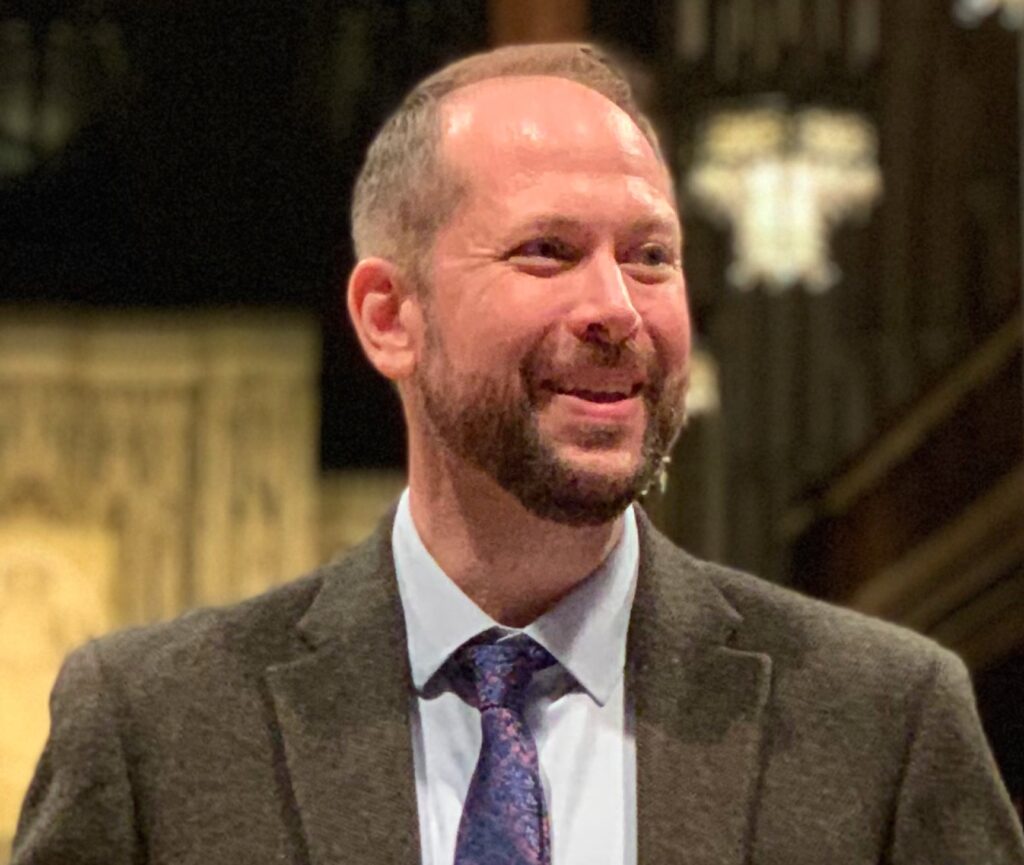
Neil Lerner
Neil Lerner’s first time attending a conference of the Sonneck Society ended up being his last: at the business meeting in 1999, a robust debate about renaming the society concluded with the vote that transformed us into the Society for American Music. He has served on and chaired several committees, including the Long-Range Planning, Local Arrangements (for the 2012 conference in Charlotte, NC), Lowens Book Award, Nominating, and Program. Lerner was Secretary of the Society for four terms, where he chronicled and coordinated eight years of agendas, committee reports, and minutes. Lerner’s editorial work includes serving as Editor of the journal American Music and the Routledge Music and Screen Media book series, as well as serving on several editorial boards. He edited or co-edited four books: Sounding Off: Theorizing Disability in Music (2006), Music in the Horror Film: Listening to Fear (2009), Music in Video Games: Studying Play (2014), and The Oxford Handbook of Music and Disability Studies (2016). After writing one of the first musicological dissertations on film music, he went on to publish widely on music in a variety of screen media genres and time periods, including film music, television music, video game music, music and disability, and music in pinball. At Davidson College he is the J. Estes Millner Professor of Music and Core Faculty and Chair of the Department of Film, Media, and Digital Studies; he has also held the E. Craig Wall, Jr. Distinguished Teaching Professorship in the Humanities.
2025
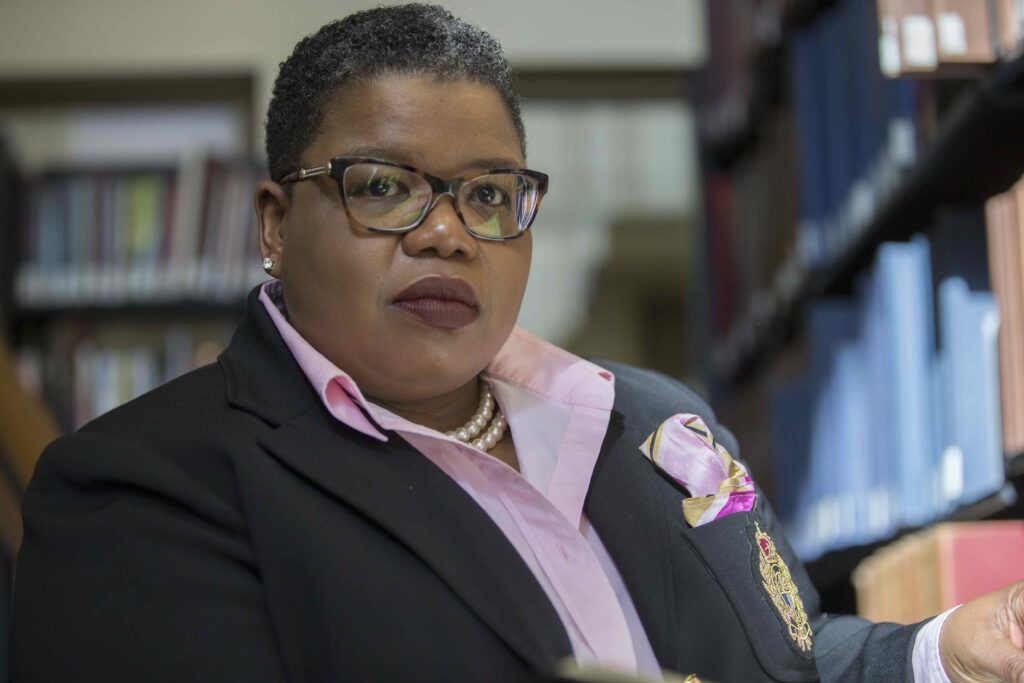
Tammy L. Kernodle
A native of Danville, Virginia, Tammy L. Kernodle is the University Distinguished Professor of Music and the inaugural Park Creative Arts Professor at Miami University in Oxford, OH. Kernodle received a B.M. in Choral Music Education with a concentration in piano from Virginia State University and a M.A. and Ph.D. in Musicology from The Ohio State University. Kernodle is the Past President of the Society for American Music and Phi Beta Kappa’s 2024-2025 John Updike Memorial Scholar. Kernodle is the author of the biography Soul on Soul: The Life and Music of Mary Lou Williams and served as Associate Editor of the three-volume Encyclopedia of African American Music. She was also one of the editors for the revision of the New Grove Encyclopedia of American Music and currently serves the Advisory Board of Grove Music Online, the world’s premier online music encyclopedia, offering comprehensive coverage of music, musicians, music-making, and music scholarship. She was a contributor to The African American Lectionary Project, the Smithsonian Anthology of Hip Hop and Rap, the Smithsonian Anthology of Jazz, and the Carnegie Hall Digital Timeline of African American Music. Her scholarship also appears in numerous anthologies and reference works including Women’s Voices Across Musical Worlds, John Coltrane and Black America’s Quest for Freedom: Spirituality and the Music, The Cambridge Companion to Women in Music Since 1900, Hidden Harmonies: Women and Music in Popular Entertainment, and Music in Black American Life, 1945-2020 (from Dr. Kernodle’s website). Image credit: Tammy Kernodle Portrait for Spring Ad Campaign K11118.
2024
Joice Gibson
Joice Gibson has been on the faculty of Metropolitan State University of Denver since 1999. Her research interests include English comic opera, opera, blackface minstrelsy, early American music publishing, music and the brain, recorder (instrument) literature, globalization of music, corridos of Mexico, historical ethnomusicology, transcultural music participation, African American spirituals, musical theater, film music, music history pedagogy, OER, Creative Commons licensing, issues and best practices for teaching with AI. As a longtime member of SAM, Gibson has served on several committees and as conference manager.
2023
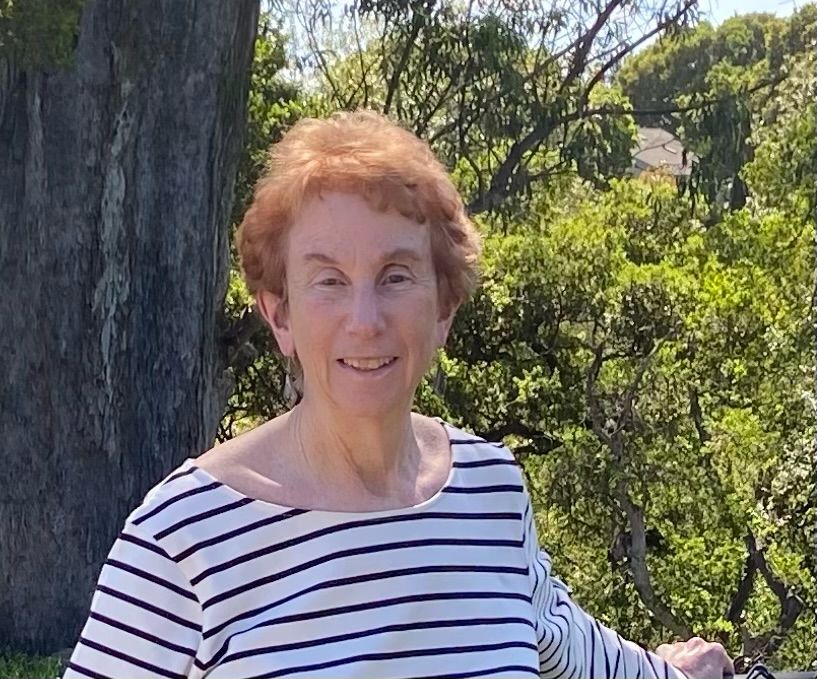
Leta Miller
Leta Miller, Professor of Music Emerita at the University of California, Santa Cruz, has published widely on music in the twentieth century, including her 2011 book Music and Politics in San Francisco: From the 1906 Quake to the Second World War. She previously coauthored two books on composer Lou Harrison and published a critical edition of his works. Her biography of Pulitzer-Prize-winning composer Aaron Jay Kernis appeared in 2014. Miller is the author of more than twenty articles on Harrison, John Cage, Henry Cowell, and Charles Ives; on various aspects of music in the San Francisco area (including several on racial issues in the pre-World War II era); and on the musical philanthropy of Phoebe Apperson Hearst. Her article on Henry Cowell and John Cage in the Journal of the American Musicological Society won the Lowens Award from the Society for American Music.
2022
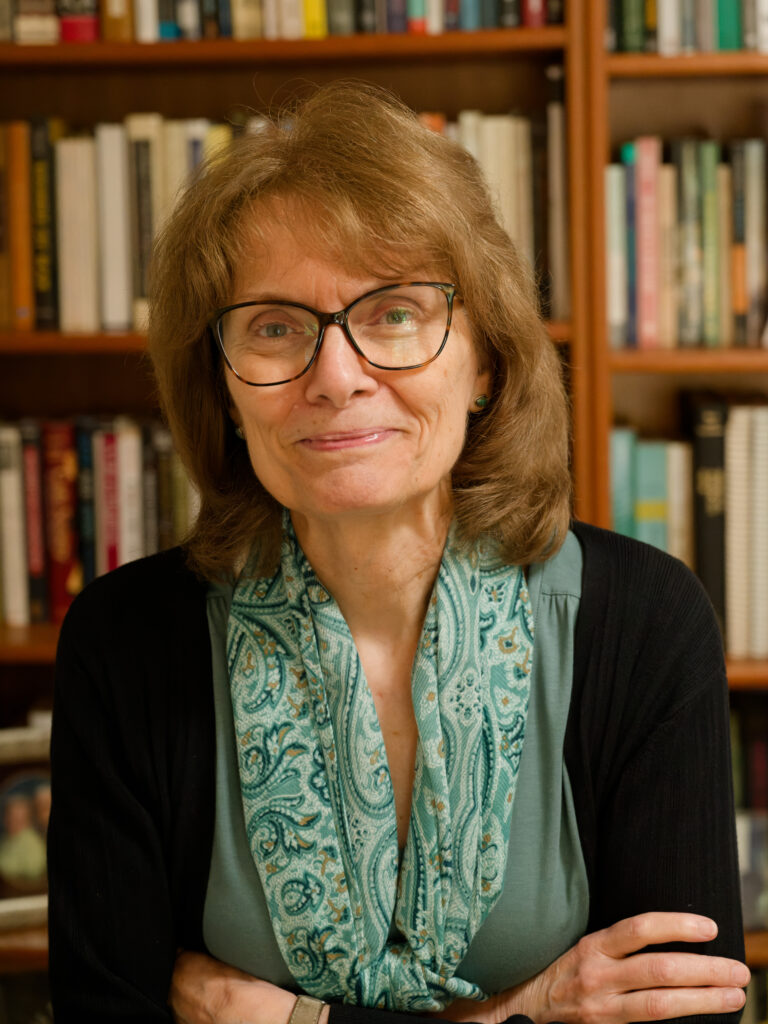
Denise Von Glahn
Denise Von Glahn is Professor of Musicology in the College of Music at Florida State University where she served as Director of the Center for Music of the Americas for twelve years and Curtis Mayes Orpheus Professor and Coordinator of the Musicology Area for seven. She currently serves as President of the Society for American Music. Her scholarly interests include the music of Charles Ives, music and place, ecomusicology, music and identity, music and gender, music and institutions, and biography. She has published essays, articles, and book chapters, as well as a critical edition of Leo Ornstein’s Quintette for Piano and Strings, and five books: The Sounds of Place: Music and the American Cultural Landscape, (which won the 2004 ASCAP-Deems Taylor Award); Leo Ornstein: Modernist Dilemmas, Personal Choices, written with Michael Broyles, (which won the 2009 Irving Lowens Book Award from the Society for American Music); Music and the Skillful Listener: American Women Compose the Natural World, (which won the 2015 Pauline Alderman Award from the International Alliance for Women in Music); Libby Larsen: Composing an American Life, (2017, a part of the University of Illinois Press, Music in American Life Series); and Circle of Winners: How the Guggenheim Foundation Composer Awards Shaped American Music Culture that appeared in 2023 and won Von Glahn a second ASCAP-Deems Taylor Award. She takes enormous pleasure in working with students and directing theses and dissertations on a range of topics that explore US American music culture and has been recognized at two different universities with awards for excellence in teaching.
2021
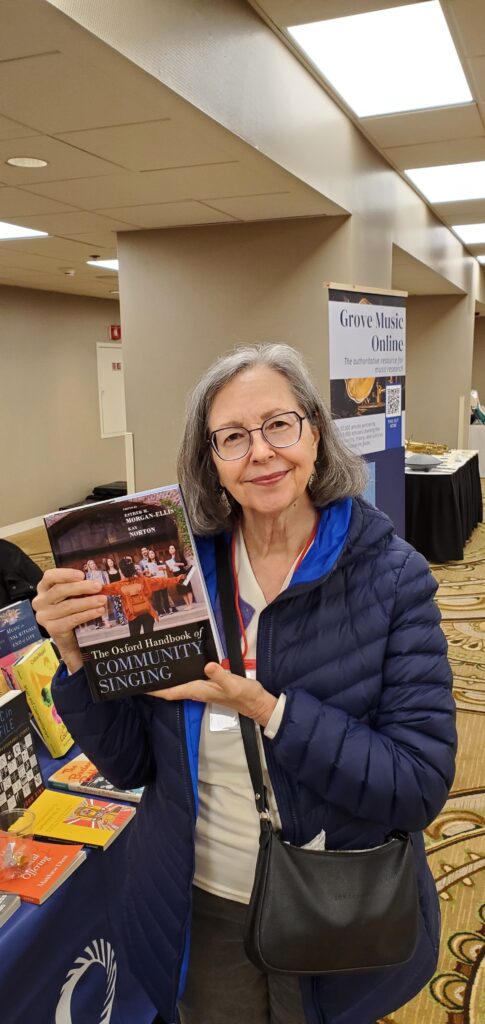
Kay Norton
Kay Norton is Professor Emerita of Musicology at Arizona State University. She has served two terms as SAM Vice President and chaired several committees, including Local Arrangements (Kansas City), Program (San Antonio), Conference Site Selection, Gender and American Music, and Honors and Awards. Her monograph, Sallie Martin, Mother of Gospel Music (2026), contextualizes and re-interprets the life and legacy of a gospel pioneer. With Esther Morgan-Ellis, Norton co-edited the 47-chapter Oxford Handbook for Community Singing (2024). Her interest in synthesizing musicology with research in the health sciences is exemplified in Singing and Wellness: Ancient Wisdom, Modern Proof (Routledge, 2016) and “How Music-Inspired Weeping Can Heal” (Journal of Medical Humanities, 2011). Elsewhere, Kay has presented and published on US American sacred music. A lifelong community singer and pianist, she currently directs the music program at a Congregational UCC church in Scottsdale, AZ.
2020

Katherine “Kitty” Preston
Katherine K. Preston is the Bottoms Professor of Music, Emerita, at William & Mary, where she taught for thirty years and served as Chair of the Department of Music for seven. Her academic degrees are from The Evergreen State College (Olympia, Washington; BA Liberal Arts, 1974), the University of Maryland (MM, 1981), and the Graduate Center, CUNY (Ph.D, 1989). SAM has been her scholarly home since 1979, when she attended her first conference (Sonneck Society, Baltimore); she has subsequently served on (and chaired) many committees, was on the Board of Trustees (1981-83), Secretary (1997-2002), and President (2011-13), during which time she organized SAM 2.0, the Society’s first capital campaign, which raised $1 million. An enthusiastic scholar of nineteenth-century American musical culture, she has published articles, chapters, and four monographs on that topic, including two prize-winning books on opera performance history in 19th-century America, a study of musicians’ work in Washington, D. C. (1877-1900), and a biography of George Frederick Bristow (1825-1898). She has also edited (or co-edited) four scholarly editions, including Bristow’s second and fourth symphonies. In 2022 she organized the Forging an American Musical Identity project, which promotes both knowledge of 19th century American musical culture and performance of music written in the US during that period; she continues as Chair of the FAMI Board. Preston’s scholarship has been recognized and supported by the Fulbright Program, NEH, National Humanities Center, American Antiquarian Society, Newberry Library, New York Public Library, Ransom Center (UT/Austin), New York Historical Society, and elsewhere. She also loves gardening, hiking, and traveling and has been an avid cyclist for her entire life.
2019
Mariana Whitmer
2018
bruce d. mcclung
2017
Judy Tsou
Judy Tsou is emeritus music librarian at the University of Washington. Before her retirement in 2017, she was head of the Music Library at UW and an affiliate faculty member at the School of Music. She was on the editorial team for Amerigrove (2013), for which she commissioned and edited more than 200 articles. She was on the editorial boards of JSAM (2008-2013), JAMS (2003-2008), and a founding editorial board member of Women and Music (1997-2008). She has published widely: on music archives, online sound recordings, and race and gender in music and opera. Her Cecilia Reclaimed (Illinois, 1994) won two awards: the Koppelman Award (1996) and Outstanding Academic Book by CHOICE (1995). She has lectured in the US, Europe, Asia, and Australia. She has been active in both musicology and music librarianship organizations. She served as Vice President of the American Musicological Society (2018-2020), President of the Society for American Music (2013-15), and President of the International Association of Music Libraries, US Branch (2008-2011) where she led the merger of IAML-US and the Music Library Association. She won the MLA Papakhian Special Achievement Award twice, for the merger in 2012, and her diversity initiatives in 2018. Other honors include the Distinguished Service Award at SAM (2017) and a Lifetime Achievement Award at her alma mater, Skidmore College (2025). She was inducted as an Honorary Member at AMS for being “a force in fostering the development of American musics,” and for “outstanding contributions to the advancement of scholarship in music.”
2016
Thomas L. Riis
Thomas L. Riis is Professor Emeritus of musicology at the University of Colorado Boulder, where he served as Director of the American Music Research Center from 1992–2018. His book, Just Before Jazz: Black Musical Theater in New York, 1890 to 1915, won an ASCAP-Deems Taylor Award. He is also the author of the book Frank Loesser. He lives in Oberlin, Ohio (bio from SUNY Press).
2015
Carol J. Oja
Carol J. Oja is William Powell Mason Professor of Music and American Studies at Harvard University, a former Faculty Director of the Humanities Program at the Radcliffe Institute for Advanced Study, and a former Director of the Hitchcock Institute for Studies in American Music at Brooklyn College. She is an elected member of the American Academy of Arts and Sciences and the American Philosophical Society. She is a past-president of SAM (2003-05), and she has been honored repeatedly by the Society: Irving Lowens Book Award (2000) for Making Music Modern: New York in the 1920s (Oxford); Distinguished Service Award (2015); Irving Lowens Article Award (2021) for “Marian Anderson’s 1953 Concert Tour of Japan: A Transnational History” (with Katie Callam, Makiko Kimoto, and Misako Ohta, published in American Music); and the Lifetime Achievement Award (2022). Her Bernstein Meets Broadway: Collaborative Art in a Time of War (Oxford University Press, 2014) won the Music in American Culture Award from the American Musicological Society. Her most recent book is Sounding Together: Collaborative Perspectives on U.S. Music in the 21st Century, edited together with Charles Hiroshi Garrett (University of Michigan Press). Together with Katie Callam and Christina Linklater, she curated and researched Eileen Southern and The Music of Black Americans: A Digital Exhibit. She served as Leonard Bernstein Scholar-in-Residence with the New York Philharmonic, and she twice chaired the Pulitzer Prize committee in music. Her current book-in-progress is provisionally titled: Jim Crow in the Concert Halls of Washington, DC: Exploring the Racism that Provoked Marian Anderson’s 1939 Performance at the Lincoln Memorial.
2014
Michael Broyles
Michael Broyles is Professor of Musicology at Florida State University, retired, and Distinguished Professor of Music and Professor of American History-Emeritus, at Pennsylvania State University. His areas of specialization are American music and music of the Classic era, especially Beethoven. He has also published on the connection between music and photography. Broyles most recent book, Revolutions in American Music: Three Decades that Changed the Country and its Sounds was published in 2024 (WW Norton). An earlier book written with Denise Von Glahn, Leo Ornstein: Modernist Dilemmas, Personal Choices (2007), won the Irving Lowens Award from the Society for American Music as the best book on American music for the year. Broyles is the author of five other books, and with Denise Von Glahn a critical edition of Leo Ornstein’s Quintette for Piano and Strings. Broyles has published many articles, in journals such as Music in Art, Musical Quarterly, Nineteenth-Century Music, Music Review, Journal of Aesthetics and Art Criticism, Journal of the Society for American Music, Beethoven Journal, Revue belge de Musicologie, including four in the Journal of the American Musicological Society, the latter which shows he is a glutton for punishment. He has contributed chapters to several other books. Broyles has an M.M. in music theory and a Ph.D. in musicology from the University of Texas at Austin, and he has received numerous awards, including two National Endowment for the Humanities Fellowships. He is a Past-President of the Society for American Music, and was a music critic for the Baltimore Sun.
2013
Mary Wallace Davidson
Mary Wallace Davidson served as President of the Music Library Association (MLA) from 1983 to 1985 and as President of the US Branch of the International Association of Music Libraries (IAML) from 2005 to 2008. She was an active member of the Society for American Music (SAM), serving on the Lowens Book Award and Program Committees. Davidson held positions as head music librarian at several major institutions, including Brookline Public Library, Radcliffe College, Wellesley College, the Eastman School of Music, and Indiana University.
2012
Paul Wells
Paul F. Wells served as the President of SAM from 2001-2003. He held the position of Director of the Center for Popular Music at Middle Tennessee State University from 1985 to 2010. Named Emeritus in 2011, Wells built the Center’s library and archive into one of the country’s finest popular music research collections.
2011
Craig B. Parker
2010

Dale Cockrell
Dale Cockrell is Professor of Musicology Emeritus at Vanderbilt University and a Research Associate of the University of the Free State (South Africa). He has also held appointments to Indiana University, the University of KwaZulu-Natal (South Africa), Dartmouth College, Middlebury College, College of William and Mary (where he was the David N. and Margaret C. Bottoms Professor of Music), the University of Alabama, and Middle Tennessee State University (where he was Director of the Center for Popular Music). He is a former President of the Society for American Music, from which he received the Distinguished Service Award and the Lifetime Achievement Award, an elected Member of the American Antiquarian Society, and the founder and former President of Pa’s Fiddle Recordings, LLC. He is widely published in the field of American music studies, including Everybody’s Doin’ It: Sex, Music, and Dance in New York, 1840-1917; The Ingalls Wilder Family Songbook; Demons of Disorder: Early Blackface Minstrels and Their World, which won the C. Hugh Holman Award; Excelsior: Journals of the Hutchinson Family Singers, 1842-1846, recipient of the Irving Lowens Award; nine other books and editions; more than seventy scholarly articles; and produced four albums of music embedded in the Little House books. Cockrell has received three NEH Fellowships among other awards and grants, and takes special pride in The Margaret Cuninggim Mentoring Prize “for outstanding contributions to the professional and intellectual development of Vanderbilt women.” Dale lives now in the mountains of Vermont, where he allows for a silence that suggests a more just and natural world.
2009
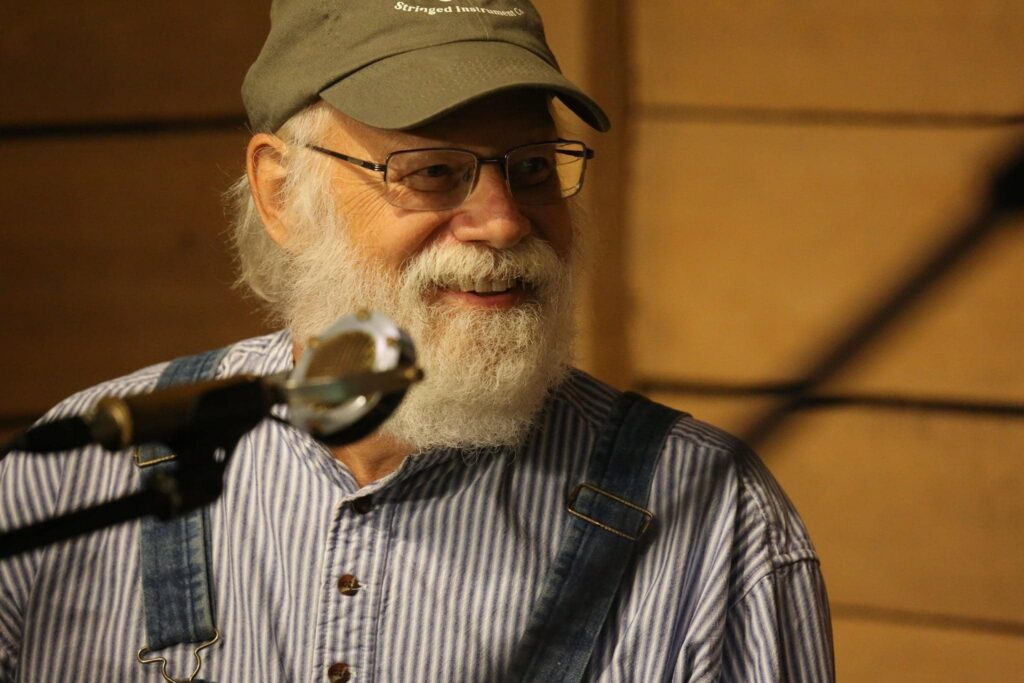
Ronald A. Pen
Ron Pen is a professor emeritus of music at the University of Kentucky where he was also Founding Director of the John Jacob Niles Center for American Music. He served as Associate Director, Coordinator of the Division of Musicology and Ethnomusicology, and Director of Appalachian Studies at UK. His research is focused on traditional Appalachian culture with recent publications including I Wonder As I Wander: The Life of John Jacob Niles, “Preservation and Presentation of the Folk: Forging an American Identity” in Music, American Made, and “Somewhere’s On the Track” in Appalachia in Regional Context. Currently he is writing a book on traditional Appalachian musician Jean Ritchie under contract to the University Press of Kentucky. Pen is also active as a musician, performing on piano, organ, dulcimer, and fiddle. As a member of the Red State Ramblers string band, he participated in U.S. State Department sponsored travels to Kyrgyzstan, China, Ecuador, and Italy. He is a founding member of the Appalachian Association of Sacred Harp Singers with whom he sang on Garrison Keillor’s Prairie Home Companion radio program and has lead singing schools throughout the Southeast. As an “engaged musicologist,” Ron participated in Shapes of Water/Sounds of Hope,” a multi-year performance art collaboration involving Sufi dhikr chant and shape note singing in Lancashire, United Kingdom. Current musical activity includes hosting an Old Time Music jam Monday evenings at Old North in Lexington and Sacred Harp Singing with the Appalachian Association of Sacred Harp Singers.
2007
Dianna Eiland
2006
Josephine Wright
2005

Anne Dhu McLucas
Anne Dhu McLucas (1941-2012) was a brilliant polymath with wide-ranging interests in all things musical, a wonderful teacher, a gifted and supportive mentor, and a path-breaking scholar. She received her PhD from Harvard University and taught at Harvard, Boston College, Wellesley College, Colorado College, and the University of Oregon. She was the recipient of fellowships from Fulbright, the Smithsonian, and the National Endowment for the Humanities, and the author of several books, including The Musical Ear: Oral Tradition in the USA.
2004
John Graziano
John Michael Graziano has sustained a career of 40-plus years since completing his PhD in historical musicology at Yale University in 1969. His contributions include longevity as a teacher at CUNY and the Graduate Center, where he was a devoted mentor to hundreds of students and adviser to their dissertations. He is emeritus director of “Music in Gotham,” an NEH-sponsored project documenting music performance in New York City from 1862–1875. Graziano is a former editor of the journal American Music, recipient of SAM’s 2000 Irving Lowens Article Award for “The Early Life and Career of the ‘Black Patti’: The Odyssey of an African American Singer in the Late Nineteenth Century,” and president of the Society for American Music from 2007 to 2009. He has written numerous articles in scholarly journals. His extensive editorial work includes general series editor of Recent Researches in American Music; a co-edited volume with the late Susan Porter, Vistas of American Music: Essays and Compositions in Honor of William E. Kearns (1999); and European Music and Musicians in New York City, 1840–1900 (2006).
2003
Jean Geil
2001

Judith McCulloh
Folklorist and ethnomusicologist Judith McCulloh (1935-2014) served as editor for the Music in American Life series during her tenure at the University of Illinois Press. In 2004, the American Folklife Center named her Trustee Emerita and in 2010, she received the Bess Lomax Hawes National Heritage Fellowship from the NEA.
2000
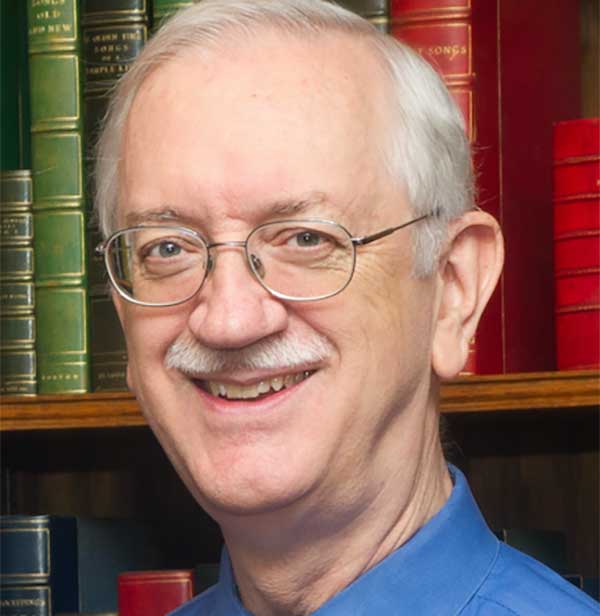
Deane L. Root
Deane L. Root was Curator of the Stephen Foster Memorial and administrator of Heinz Memorial Chapel at the University of Pittsburgh when he was elected president of the Sonneck Society. He had helped create the Society’s journal American Music, and edited or co-edited two of its special issues. As a staff editor for The New Grove in London in the 1970s, he had created its popular-music coverage. During his presidency (1989-93), the Society implemented its first strategic plan, changed its name to the Sonneck Society for American Music, created a handbook for the tasks of officers and committees, diversified the board, and adopted the rotation of president elect—president—past president. He served as the Society’s delegate to the American Council of Learned Societies. In 1995 he initiated the Society’s first major education project, Voices Across Time.
1999
Alan C. Buechner
Alan C. Buechner (1926–1998) served as Professor of Music at Queens College, CUNY from 1967 to 1992. His research explored singing schools, vernacular music and dance traditions, and 19th century religious music in the US. Buechner was a founding member and officer of the Sonneck Society.
1998
J. Bunker Clark
J. Bunker Clark was a Professor of Music History at the University of Kansas and the author of Transposition in Seventeenth Century English Organ Accompaniments and The Transposing Organ. In addition to serving as editor of the Anthology of Early American Keyboard Music, 1787-1830, he contributed articles to Notes, Fontes Artis Musicae, Musica Disciplina, Music & Letters, and The American Organist.
1997
Margery Morgan Lowens
Margery Morgan Lowens was a founding member of the Sonneck Society for American Music. She played a pivotal role in the Society’s growth through her service, support, commitment, and philanthropy. Margery Lowens served as the society’s first vice-president while her husband, Irving Lowens, also a founder of the society, served as president.
1996

Wayne Shirley
Wayne Shirley served thirty-seven years as a reference librarian and then music specialist in the Music Division at the Library of Congress, during which time he assisted and mentored generations of scholars.
1995
Kate Van Winkle Keller
Kate Van Winkle Keller (1937–2018) devoted her career to the study of musical and dance traditions of early America. Her major publications include The Playford Ball: 103 Early Country Dances 1651-1820 (with Genevieve Shimer), Dance and Its Music in America, 1528–1789, George Washington: A Biography in Social Dance (with Charles Cyril Hendrickson), and If the Company Can Do It: Technique in the Eighteenth Century. She served as an officer and Executive Director of the Society for American Music from 1977 to 2000 and played an integral role in elevating SAM’s national profile. She was also a founding member and Research Director of the Colonial Music Institute. Keller’s contributions were recognized through numerous honors, including election to the American Antiquarian Society in 2004 and honorary membership in the Country Dance and Song Society in 2011.
1994
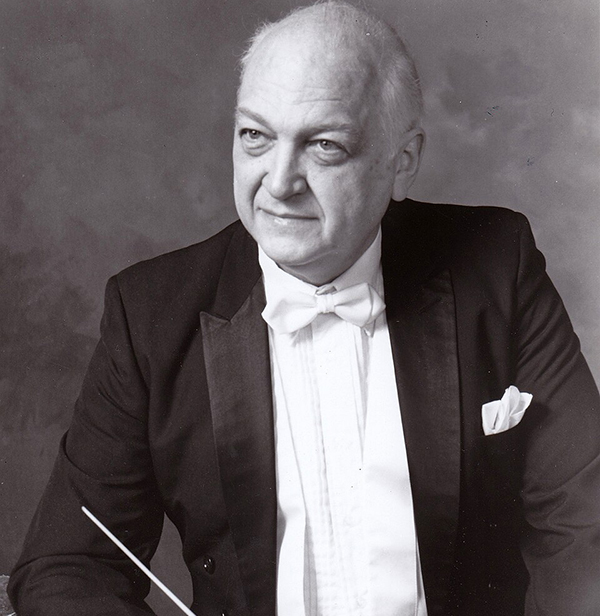
Raoul F. Camus
Raoul Camus is a scholar of American band music and professor emeritus of music at Queensborough Community College of the City University of New York. Camus has served the Society as both president and treasurer, and through his leadership on various committees, including Conference Site Selection and Honors and Awards.
1993
Susan L. Porter
Susan Porter (1941–1993) was a musicologist, educator, author, and advocate for American music. Porter spent fifteen years on the Lima campus of the Ohio State University, where she taught courses in American music, European music history, folk music, and regional musical traditions. She authored Basic Experiences in Music for the Elementary Teacher (1985) and became the first woman to receive a full professorship at Ohio State Lima. In recognition of her contributions to education and public service, she was inducted into the Ohio Women’s Hall of Fame. A leading scholar of early American musical theater, Porter received national recognition for her book With an Air Debonair: Musical Theatre in America, 1785–1815, which earned the Irving Lowens Award from the Society for American Music (then, the Sonneck Society). Porter performed as a folk musician and directed the Black Swamp Dulcimer Festival.
1992
William K. Kearns
William (Bill) Kay Kearns (1928–2020) was a horn player, musicologist, educator, and advocate for American music. After earning bachelor’s and master’s degrees in music from The Ohio State University and a Ph.D. in Musicology from the University of Illinois at Urbana-Champaign in 1965, he joined the faculty of the University of Colorado Boulder, where he taught French horn and music history for more than three decades. Before his appointment at Colorado, Kearns served on the faculty of Ohio State University and performed as principal horn with the Columbus Symphony Orchestra from 1952 to 1965. At the University of Colorado, he played a central role in shaping graduate music education, establishing the university’s PhD program in Musicology and later serving as Associate Dean of Graduate Studies. In 1992, he founded the American Music Research Center at the University of Colorado where he brought together significant collections of American music materials.
1991
Allen P. Britton
Allen Perdue Britton received his PhD in musicology from the University of Michigan in 1949 and served as professor of music and then dean for 47 years. Britton was the founding editor of Journal of Research in Music Education and the founding editor of American Music. His research examined the field of early American tunebooks.
1989
William Lichtenwanger
William Lichtenwanger was a founding member of the Society, where he played an integral role in building a solid foundation to enable future growth. Lichtenwanger established the Sonneck Society’s archives at the Library of Congress, where he served as a music librarian for 34 years. He also served as an associate editor and then editor of Notes and as music editor for Collier’s Encyclopedia. On April 8, 1989 he was the first recipient of the Distinguished Service Award.