Description
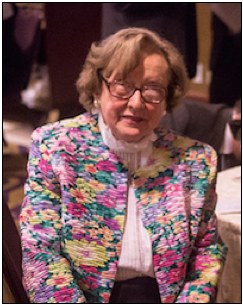
The Margery Lowens Dissertation Research Fellowship honors Margery Morgan Lowens, a founding member of the Sonneck Society for American Music, who played a pivotal role in its growth through her service, support, commitment, and philanthropy. Margery Lowens served as the society’s first vice-president while her husband, Irving Lowens, also a founder of our society, served as president. The fellowship seeks to address her vision, developed through her career as a scholar and teacher, of supporting student research at the early stages of the Ph.D. dissertation process.
The fellowship may be used to fund research costs (including but not limited to travel expenses, books, and media resources) conducted or purchased between July 15, 2026 and September 30, 2027.”
The maximum award amount is $4,000. Applications for smaller amounts are welcome, and the Society may split the award between multiple fellows. The successful applicant/s will also receive one complimentary year of membership in the Society. A one-page budget and final report must be submitted by the recipient to the Executive Director of the Society no more than one year after the award is presented.
Eligibility
The fellowship is awarded competitively to students at the early stages of their dissertation research on American music and must have advanced to Ph.D./DMA candidacy (or the equivalent) between January 1, 2025 and July 1, 2026. As the Society for American Music is dedicated to the study, teaching, creation, and dissemination of all musics in the Americas, we welcome proposals on all topics related to music in or of the Americas from students in all relevant fields (including, but not limited to, musicology, ethnomusicology, and American studies).
Application Requirements
In addition to the application form, please submit the following material as a single PDF:
- One-page letter of application with contact information
- Narrative of no more than eight pages (double-spaced) that that briefly describes the dissertation and outlines the scope of the research to be conducted with the aid of the fellowship
- One-page budget outlining the expenses for which the fellowship will be used (the committee particularly values budgets that show accurate, realistic, and frugal estimates of expenses that are vital to the research project)
- Under separate cover, the dissertation adviser should submit a letter of reference to the fellowship committee chair attesting to the project’s importance and the candidate’s ability to complete it; the letter should also indicate the official date when doctoral candidacy (or equivalent benchmark) was achieved. These letters may be sent to the committee chair.
Deadline
July 15
Past Fellows
| Year | Winners |
|---|---|
| 2026 | Morgan Bates, "'The Space in My Mouth': Drag Vocal Performance as Material(ized) Resistance in the United States" John C. Wood, "A Highway Acoustemology: American Popular Music in the Age of Internal Combustion" |
| 2025 | Ruby Erickson, "Listening and Longing: Music, Value, and Desire in Cape Verdean New England" Ana María Diaz Pinto, "Ana María Diaz Pinto Excessive Nights: Reggaetón Socio-Sonic Routes, Musical Creation, and Dance in Santiago de Chile" Mercedes Payán Ramírez, "Political Alliances among Women Musicians of the Oaxacan Philharmonic Band Tradition" |
| 2024 | Emma Jensen, "Fat Musicology: Body Size, Race, and Gender in American Popular Music" Kari Lindquist, "Wind Bands in Cold War Musical Diplomacy: The University of Michigan Symphony Band's 1961 Tour" |
| 2023 | David Catchpole (New York University), “Sonic Melting Pot: Symphonic Radio Broadcasts and Identity Formation in the Depression-Era United States” Stephanie Espie (Florida State University), “Junior Panorama: Local, National, and Global Understandings in Trinidadian Youth Centered Spaces” Elizabeth Rouget (Princeton University), “Dance as Translation: Establishing French Opera, Ballet, and Circus in Early North America, 1780–1810” |
| 2022 | Samuel Golter “Musical Eugenics: Manufacturing Anglo-Saxon Humanity at the Post-Reconstruction University” Kendall Hatch Winter “Suffragist and Antisuffragist Music and Sound in the United States, 1867–1920” |
| 2021 | Ayesha Casie-Chetty, University of Cincinnati, “Voice, Body, and Identity: How Racial Minority Opera Singers Negotiate Race and Gender” Alexandra Krawetz, Yale University, “Songs, Safe and Sound: Children’s Educational Music in Interwar America” Daniel Fister, Washington University St. Louis, “Scholastic A Cappella and the Construction of Whiteness, Community, and Power” |
| 2020 | Clifton Boyd,“The Role of Vernacular Music Theory in the Institution of Barbershop Music” Alexander Cowan,“Unsound: A Cultural History of Music and Eugenics” |
| 2019 | Velia Ivanova, “The Musical Heritage of Incarceration: The Dissemination and Management of the Lomax Collection Prison Songs (1933–2018)” Maria Ryan, “Hearing Power, Sounding Freedom: Black Practices of Listening and Music-Making in the Nineteenth-Century British Colonial Caribbean” |
| 2018 | Siel Agugliaro, "Imagining Italy, Surviving America: Opera, Italian Immigrants, and Identity in Philadelphia, 1880-1924" Katie Callam, "Curating Musical America, 1900-1945" Kathryn Radishofski, "Sound, Memory, and Displacement: Hip-Hop Memorialization and Gentrification in New York City" |
| 2017 | Hye-Jung Park, Cold War Musical Diplomacy between the United States and South Korea (Ohio State University) Arathi Govind, Locating Mobility: Rethinking U.S. Popular Music through Indian American Practices (University of California, Berkeley) |