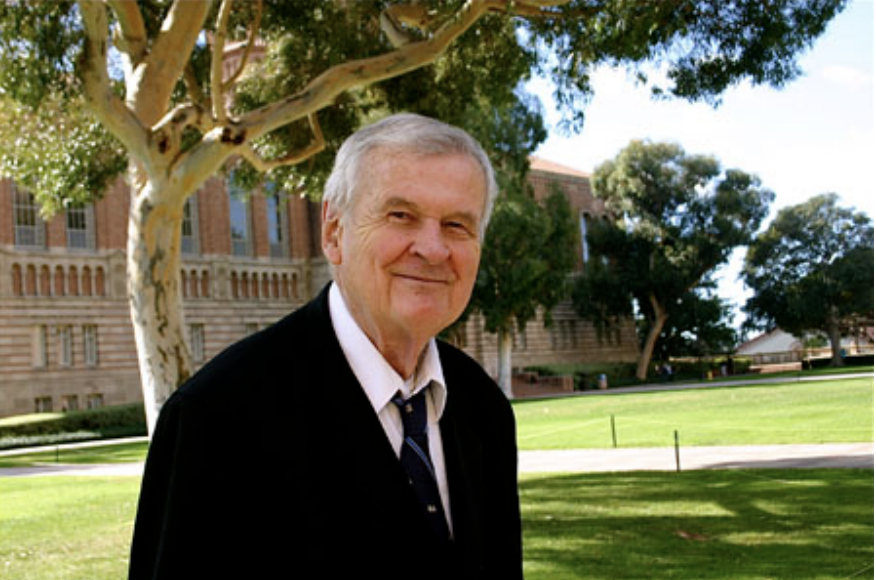
2026

Katherine Preston
Katherine K. Preston is the Bottoms Professor of Music, Emerita, at the College of William & Mary, where she taught for thirty years and served as Chair of the Department of Music for seven. Her academic degrees are from The Evergreen State College (Olympia, Washington; BA Liberal Arts, 1974), the University of Maryland (MM, 1981), and the Graduate Center, CUNY (Ph.D, 1989). SAM has been her scholarly home since 1979, when she attended her first conference (Sonneck Society, Baltimore); she has subsequently served on (and chaired) many committees, was on the Board of Trustees (1981-83), Secretary (1997-2002), and President (2011-13), during which time she organized SAM 2.0, the Society’s first capital campaign, which raised $1 million. An enthusiastic scholar of nineteenth-century American musical culture, she has published articles, chapters, and four monographs on that topic, including two prize-winning books on opera performance history in 19th-century America, a study of musicians’ work in Washington, D. C. (1877-1900), and a biography of George Frederick Bristow (1825-1898). She has also edited (or co-edited) four scholarly editions, including Bristow’s second and fourth symphonies. In 2022 she organized the Forging an American Musical Identity project, which promotes both knowledge of 19th century American musical culture and performance of music written in the US during that period; she continues as Chair of the FAMI Board. Preston’s scholarship has been recognized and supported by the Fulbright Program, NEH, National Humanities Center, American Antiquarian Society, Newberry Library, New York Public Library, Ransom Center (UT/Austin), New York Historical Society, and elsewhere. She also loves gardening, hiking, and traveling and has been an avid cyclist for her entire life.
2025

Charles H. Garrett
Charles Hiroshi Garrett was a distinguished musicologist, educator, and mentor whose research transformed the study of American music. A graduate of the musicology program at the University of California, Los Angeles, Garrett joined the faculty of the University of Michigan in 2004. His teaching and scholarship focused on twentieth- and twenty-first-century American music, exploring questions of national identity, race, and popular culture. Garrett authored Struggling to Define a Nation: American Music and the Twentieth Century (2008), which received the Irving Lowens Memorial Book Award. He served as editor-in-chief for the second edition of The Grove Dictionary of American Music. Garrett advised numerous graduate students and was widely recognized for his commitment to mentorship, scholarly collaboration, and the advancement of American music studies.
2024
J. Peter Burkholder
J. Peter Burkholder is distinguished professor emeritus of music in musicology at the Indiana University Jacobs School of Music. He is the author of Listening to Charles Ives: Variations on His America (2021), All Made of Tunes: Charles Ives and the Uses of Musical Borrowing (1995), and Charles Ives: The Ideas Behind the Music (1985), and lead author of A History of Western Music, 10th ed., with Donald Jay Grout and Claude V. Palisca, and Norton Anthology of Western Music, 8th ed., with Claude V. Palisca (2019). He is the editor of Charles Ives and His World, is co-editor of Charles Ives and the ClassicalTradition, and has articles in The New Grove Dictionary of Music and Musicians, 2nd ed., Grove Dictionary of American Music, 2nd ed., Grove Music Online, Journal of the American Musicological Society, Journal of Musicology, 19th-Century Music, Musical Quarterly, American Music, Journal of Musicological Research, Notes, Music Theory Spectrum, College Music Symposium, Journal of Music History Pedagogy, and others. His writings have been translated and published in Japanese, Spanish, German, Italian, Portuguese, Korean, Chinese, and Arabic. He has written liner notes for Decca, Deutsche Grammophon, and Centaur. Burkholder was named an honorary member of the American Musicological Society in 2010, the youngest person to receive this award. In addition, he has received awards from the American Musicological Society (Alfred Einstein Award), Society for American Music (two Irving Lowens Awards), ASCAP (two Deems Taylor Awards), and the Association for Recorded Sound Collections as well as Danforth, Rockefeller, and American Council of Learned Societies fellowships. At Indiana University, he has won awards from the Campus Life Division and the Commission on Multicultural Understanding for contributions to improving the campus climate and promoting understanding with regard to diversity issues (abridged bio from the Indiana University website).

Carol Hess
Carol A. Hess is a Distinguished Professor Emerita at the University of California, Davis. The author of seven books and over sixty articles and reviews, she has received numerous awards and grants for her research on music of the Spanish- and Portuguese-speaking world, John Philip Sousa, Brahms, film music, Paul Robeson, and cultural diplomacy. Among these are the Lifetime Achievement Award from the Society for American Music, Honorary Membership in the American Musicological Society, NEH Summer Stipends, two Robert M. Stevenson Awards for Outstanding Scholarship in Iberian Music, the Irving Lowens Article Award, and the ASCAP-Deems Taylor Award. As a Fulbright lecturer, she has taught the music of the United States in Spain, Chile, and Argentina. Her former graduate students have published books and articles and her own most recent book, on Manuel de Falla’s El amor brujo (Oxford University Press), appeared in early 2025.
Guy Ramsey
A member of the American Academy of Arts and Sciences, Guthrie P. Ramsey, Jr. is a music historian, pianist, composer, and the Edmund J. and Louise W. Kahn Term Professor of Music at the University of Pennsylvania. A widely-published writer, he’s the author of Race Music: Black Cultures from Bebop to Hip-Hop (2003), and The Amazing Bud Powell: Black Genius, Jazz History and the Challenge of Bebop (2013). Dr. Ramsey is co-author beside Samuel A. Floyd, Jr., with Melanie Zeck of The Transformation of Black Music: The Rhythms, the Songs and the Ships of the African Diaspora (2017) and editor of Rae Linda Brown, The Heart of a Woman: The Life and Music of Florence B. Price (2020). His books in progress include Who Hears Here?, a collection of essays, and the monograph Sound Proof: Black Music, Magic and Racial Intimacies, a history of African American music from the slave-era to the present. He was editor for the series Music of the African Diaspora at the University of California Press for ten years and founding editor of the blog Musiqology.com (from the University of Pennsylvania website).
2023
George Boziwick
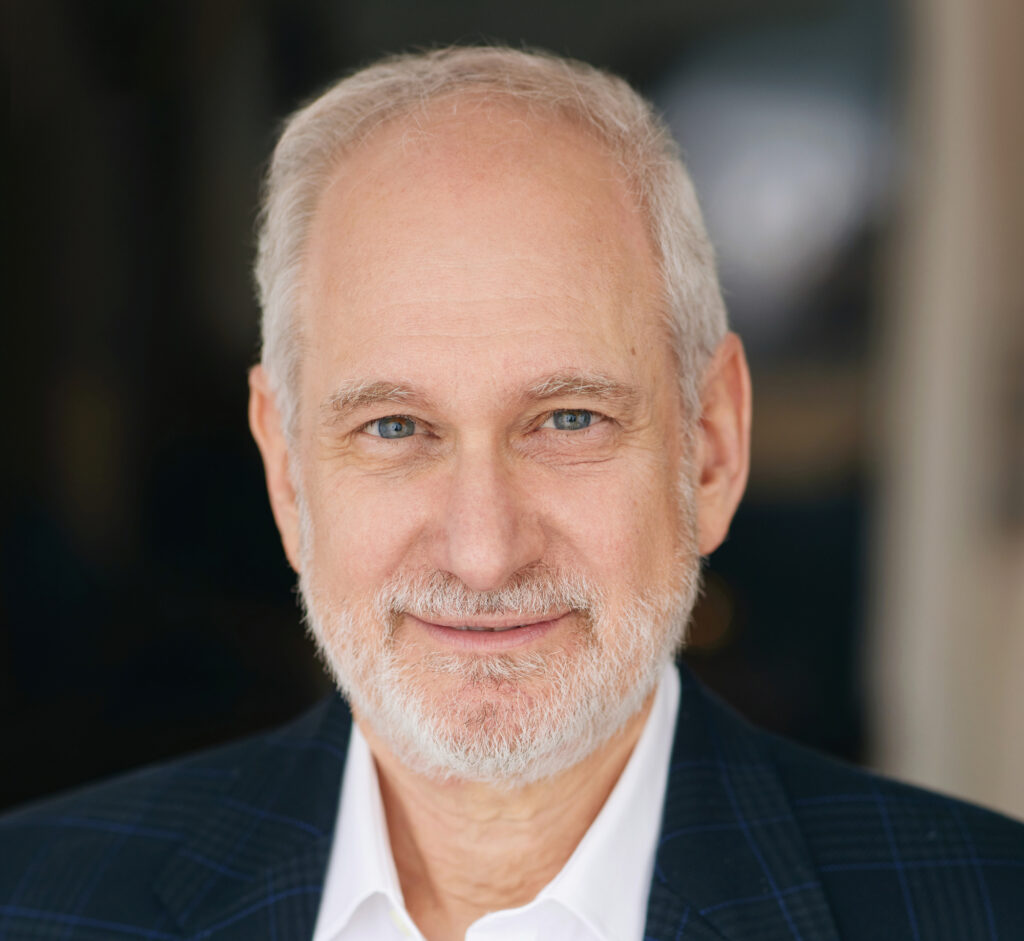
Howard Pollack
Howard Pollack is John and Rebecca Moores Professor of Music at the University of Houston, where he has taught since 1987. Born in Brooklyn in 1952, he holds degrees from the University of Michigan and Cornell University, where he received a doctorate in musicology in 1981. His eight books include award-winning biographies of composers Aaron Copland, George Gershwin, Marc Blitzstein, and Samuel Barber, and lyricist-librettist John Latouche. He is currently researching the life and music of the Swiss-American composer Ernest Bloch.
2022
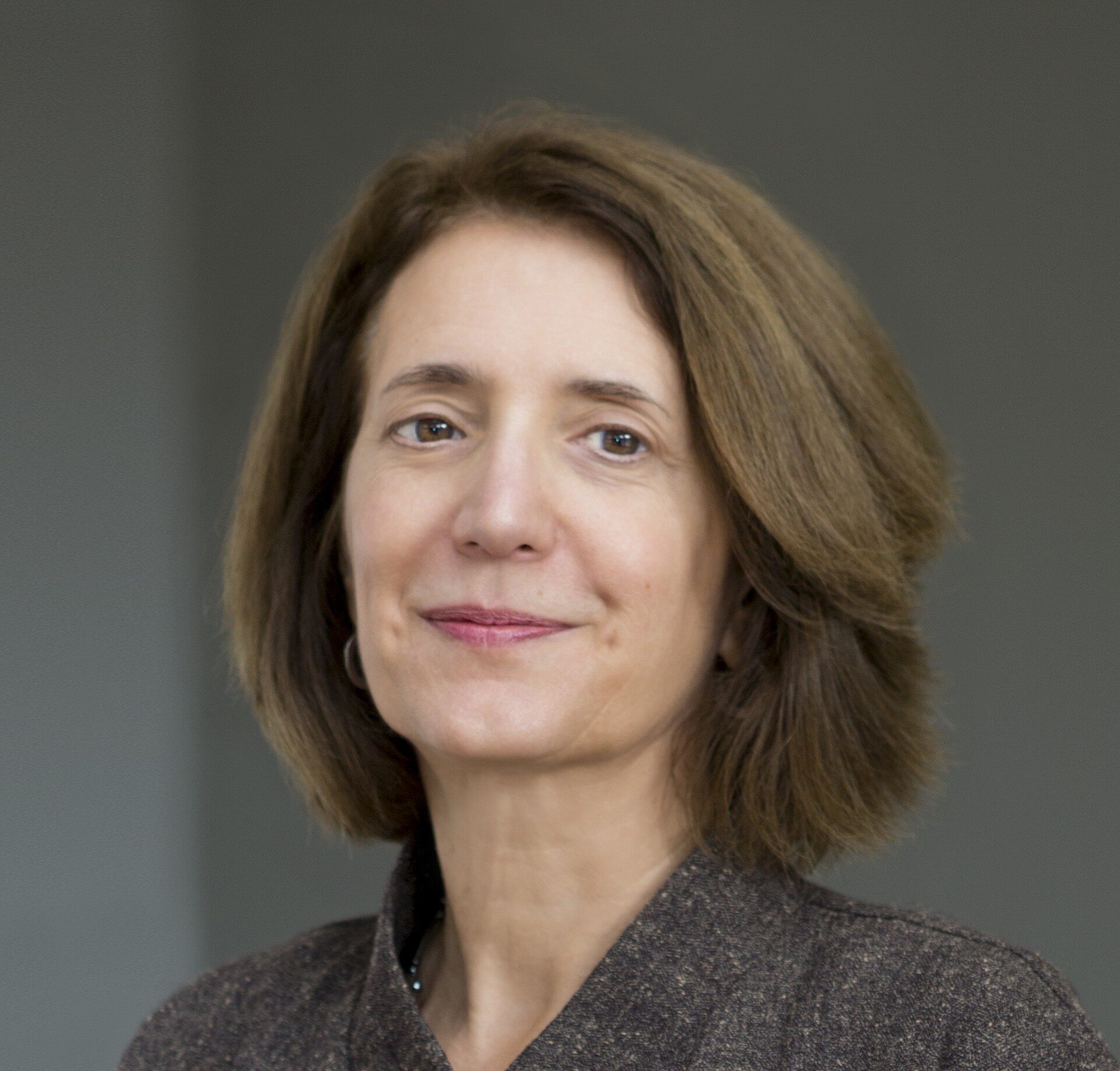
Carol J. Oja
Carol J. Oja is William Powell Mason Professor of Music and American Studies at Harvard University, a former Faculty Director of the Humanities Program at the Radcliffe Institute for Advanced Study, and a former Director of the Hitchcock Institute for Studies in American Music at Brooklyn College. She is an elected member of the American Academy of Arts and Sciences and the American Philosophical Society. She is a past-president of SAM (2003-05), and she has been honored repeatedly by the Society: Irving Lowens Book Award (2000) for Making Music Modern: New York in the 1920s (Oxford); Distinguished Service Award (2015); Irving Lowens Article Award (2021) for “Marian Anderson’s 1953 Concert Tour of Japan: A Transnational History” (with Katie Callam, Makiko Kimoto, and Misako Ohta, published in American Music); and the Lifetime Achievement Award (2022). Her Bernstein Meets Broadway: Collaborative Art in a Time of War (Oxford University Press, 2014) won the Music in American Culture Award from the American Musicological Society. Her most recent book is Sounding Together: Collaborative Perspectives on U.S. Music in the 21st Century, edited together with Charles Hiroshi Garrett (University of Michigan Press). Together with Katie Callam and Christina Linklater, she curated and researched Eileen Southern and The Music of Black Americans: A Digital Exhibit. She served as Leonard Bernstein Scholar-in-Residence with the New York Philharmonic, and she twice chaired the Pulitzer Prize committee in music. Her current book-in-progress is provisionally titled: Jim Crow in the Concert Halls of Washington, DC: Exploring the Racism that Provoked Marian Anderson’s 1939 Performance at the Lincoln Memorial.
2021
Cynthia Adams Hoover
Cynthia Adams Hoover has spent her entire professional career as a public musicologist and organologist in the museum world, as Curator of Musical Instruments at the National Museum of American History of the Smithsonian Institution (1961-2004; Curator Emerita 2004-present). During that time she significantly helped to educate the general public about the place of music and musical instruments in American culture. At the Smithsonian, she conducted research, published (articles, book chapters, exhibit catalogues, record liner notes), and curated major exhibits, including Music in Early Massachusetts, Nineteenth-Century American Ballroom Music, 1840-1860; Music Machines-American Style, and PIANO 300: Celebrating Three Hundred Years of People and Pianos. Her publications, which appeared in musicological, historical, cultural, and organological books and journals, were outgrowths of her curatorial activities and reflect the wide interdisciplinarity of her research. In 1996, she began to work with materials belonging to the Steinway family in New York and eventually secured William Steinway’s voluminous diaries for the Smithsonian; she subsequently served as Co-Editor in Chief of the William Steinway Diary (1861-1896) Project at the museum. Hoover served as president (1989-1995) of the Comité international pour les musées et collections d’instruments et de musique and was an officer or board member of the American Musical Instrument Society, the American Musicological Society, and the Society for American Music.
2020
Marva Griffin Carter
Marva Griffin Carter has an unparalleled career as teacher and scholar of African American music in all its diversity, including individual composers and performers and the broader history of jazz and its African retentions in the myriad musics of the New World. Her deep understanding of the music of the black church, springs from her decade-long service as organist at the historic Ebenezer Baptist Church in Atlanta. Carter’s groundbreaking work on Will Marion Cook, supported in part by a Smithsonian Institution Fellowship, came to fruition in Swing Along: The Life of Will Marion Cook (Oxford University Press, 2008). Other publications include “The ‘New Negro’ Choral Legacy of Hall Johnson,” in Chorus and Community, ed. Karen Ahlquist (2006); and “The ‘New Negro’ Legacy of Will Marion Cook” in Afro-Americans in New York Life and History (1999). Carter’s years of service to the Georgia State University School of Music have earned her the Barbara Jordan/W. E. B. DuBois Award for Outstanding Teaching in 1998, and her leadership roles in the Society for American Music include service on the Editorial Board of JSAM, as a member of the Program Committee and the Board. She has also represented the cause of American music outside of SAM—serving on the American Musicological Society Council and Cultural Diversity Committee and as a much-valued Member of the Committee on the Publication of American Music.
2019
John Graziano
John Michael Graziano has sustained a career of 40-plus years since completing his PhD in historical musicology at Yale University in 1969. His contributions include longevity as a teacher at CUNY and the Graduate Center, where he was a devoted mentor to hundreds of students and adviser to their dissertations. He is emeritus director of “Music in Gotham,” an NEH-sponsored project documenting music performance in New York City from 1862–1875. Graziano is a former editor of the journal American Music, recipient of SAM’s 2000 Irving Lowens Article Award for “The Early Life and Career of the ‘Black Patti’: The Odyssey of an African American Singer in the Late Nineteenth Century,” and president of the Society for American Music from 2007 to 2009. He has written numerous articles in scholarly journals. His extensive editorial work includes general series editor of Recent Researches in American Music; a co-edited volume with the late Susan Porter, Vistas of American Music: Essays and Compositions in Honor of William E. Kearns (1999); and European Music and Musicians in New York City, 1840–1900 (2006).
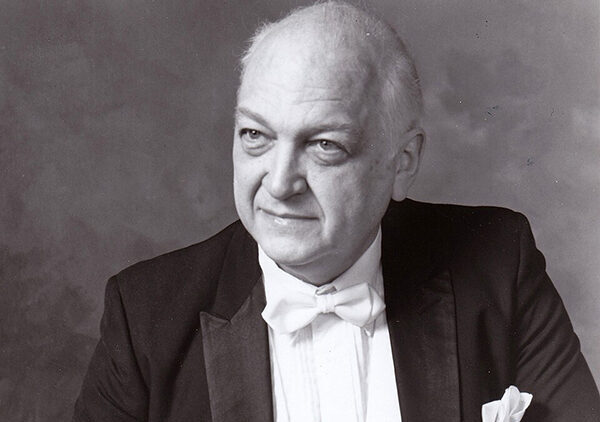
Raoul Camus
Raoul Camus is a scholar of American band music and professor emeritus of music at Queensborough Community College of the City University of New York. Camus has served the Society as both president and treasurer, and through his leadership on various committees, including Conference Site Selection and Honors and Awards.
2018
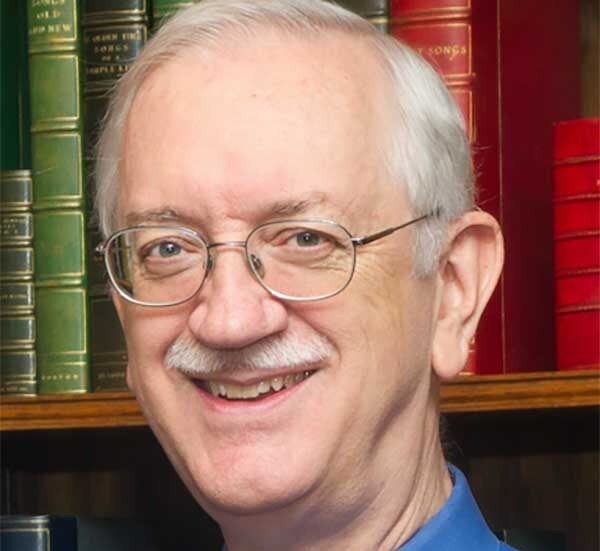
Deane Root
Deane L. Root was Curator of the Stephen Foster Memorial and administrator of Heinz Memorial Chapel at the University of Pittsburgh when he was elected president of the Sonneck Society. He had helped create the Society’s journal American Music, and edited or co-edited two of its special issues. As a staff editor for The New Grove in London in the 1970s, he had created its popular-music coverage. During his presidency (1989-93) the Society implemented its first strategic plan, changed its name to the Sonneck Society for American Music, created a handbook for the tasks of officers and committees, diversified the board, and adopted the rotation of president elect—president—past president. He served as the Society’s delegate to the American Council of Learned Societies. In 1995 he initiated the Society’s first major education project, Voices Across Time.
2017
Randy Weston
2016
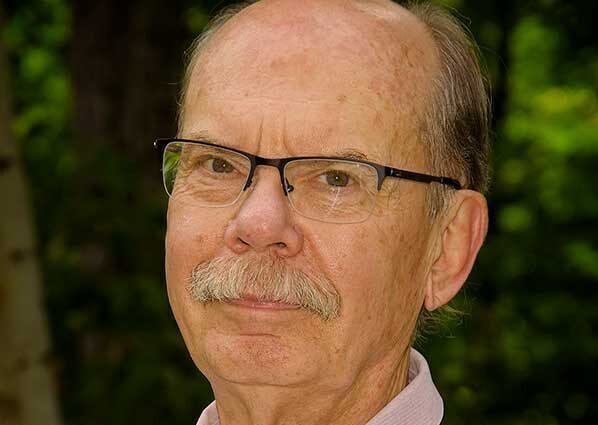
Dale Cockrell
Dale Cockrell is Professor of Musicology Emeritus at Vanderbilt University and a Research Associate of the University of the Free State (South Africa). He has also held appointments to Indiana University, the University of KwaZulu-Natal (South Africa), Dartmouth College, Middlebury College, The College of William and Mary (where he was the David N. and Margaret C. Bottoms Professor of Music), the University of Alabama, and Middle Tennessee State University (where he was Director of the Center for Popular Music). He is a former President of the Society for American Music, from which he received the Distinguished Service Award and the Lifetime Achievement Award, an elected Member of the American Antiquarian Society, and the founder and former President of Pa’s Fiddle Recordings, LLC. He is widely published in the field of American music studies, including Everybody’s Doin’ It: Sex, Music, and Dance in New York, 1840-1917; The Ingalls Wilder Family Songbook; Demons of Disorder: Early Blackface Minstrels and Their World, which won the C. Hugh Holman Award; Excelsior: Journals of the Hutchinson Family Singers, 1842-1846, recipient of the Irving Lowens Award; nine other books and editions; more than seventy scholarly articles; and produced four albums of music embedded in the Little House books. Cockrell has received three NEH Fellowships among other awards and grants, and takes special pride in The Margaret Cuninggim Mentoring Prize “for outstanding contributions to the professional and intellectual development of Vanderbilt women.” Dale lives now in the mountains of Vermont, where he allows for a silence that suggests a more just and natural world.
2015
Josephine Wright
2014
Pete Seeger
2013
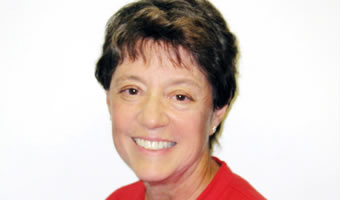
Judith Tick
Judith Tick is professor emerita of music history at Northeastern University. She is the author of Ruth Crawford Seeger: A Composer’s Search for American Music, which received the ASCAP Deems Taylor Award and the Society for American Music’s Irving Lowens Award, and Becoming Ella Fitzgerald: The Jazz Singer Who Transformed American Song. Tick has served SAM in various capacities, including as vice-president, and as chair of the Nominating, Service and Achievement Awards, and Lowens Book Award Committees.
2012
Donald Krummel
2011
Paul E. Bierley
Paul E. Bierley (1926–2016) was a distinguished band historian, musician, and an authority on the life, music, and legacy of John Philip Sousa. Bierley authored John Philip Sousa: A Catalogue of His Works, John Philip Sousa: American Phenomenon, and The Incredible Band of John Philip Sousa. His broader contributions to American music history include studies of bandmaster Henry Fillmore, editions of historical sources, journal articles, recording liner notes, and editorial work on William Rehrig’s The Heritage Encyclopedia of Band Music. A tubist from an early age, he performed with ensembles including the Columbus Symphony Orchestra and the Detroit Concert Band. Ohio State University awarded Bierley an honorary doctorate in 2001. That same year, he received the Academy of Wind and Percussion Arts Award from the National Band Association.
Kate Van Winkle Keller
Kate Van Winkle Keller (1937–2018) devoted her career to the study of musical and dance traditions of early America. Her major publications include The Playford Ball: 103 Early Country Dances 1651-1820 (with Genevieve Shimer), Dance and Its Music in America, 1528–1789, George Washington: A Biography in Social Dance (with Charles Cyril Hendrickson), and If the Company Can Do It: Technique in the Eighteenth Century. She served as an officer and Executive Director of the Society for American Music from 1977 to 2000 and played an integral role in elevating SAM’s national profile. She was also a founding member and Research Director of the Colonial Music Institute. Keller’s contributions were recognized through numerous honors, including election to the American Antiquarian Society in 2004 and honorary membership in the Country Dance and Song Society in 2011.
2010

Wayne Shirley
Wayne Shirley served thirty-seven years as a reference librarian and then music specialist in the Music Division at the Library of Congress, during which time he assisted and mentored generations of scholars.
2009
Horace Clarence Boyer
2008
Bill C. Malone
2007
Vivian Perlis
2006
Samuel A. Floyd, Jr.
2005
Dena Epstein
2004
Adrienne Fried Block
2003
H. Wiley Hitchcock
2002
Charles Hamm
2001
Richard Crawford
2000
Billy Taylor
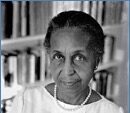
Eileen Southern
1999